How the JATAPP Meetup «We Had a Plan» Went
Apr 1, 2026
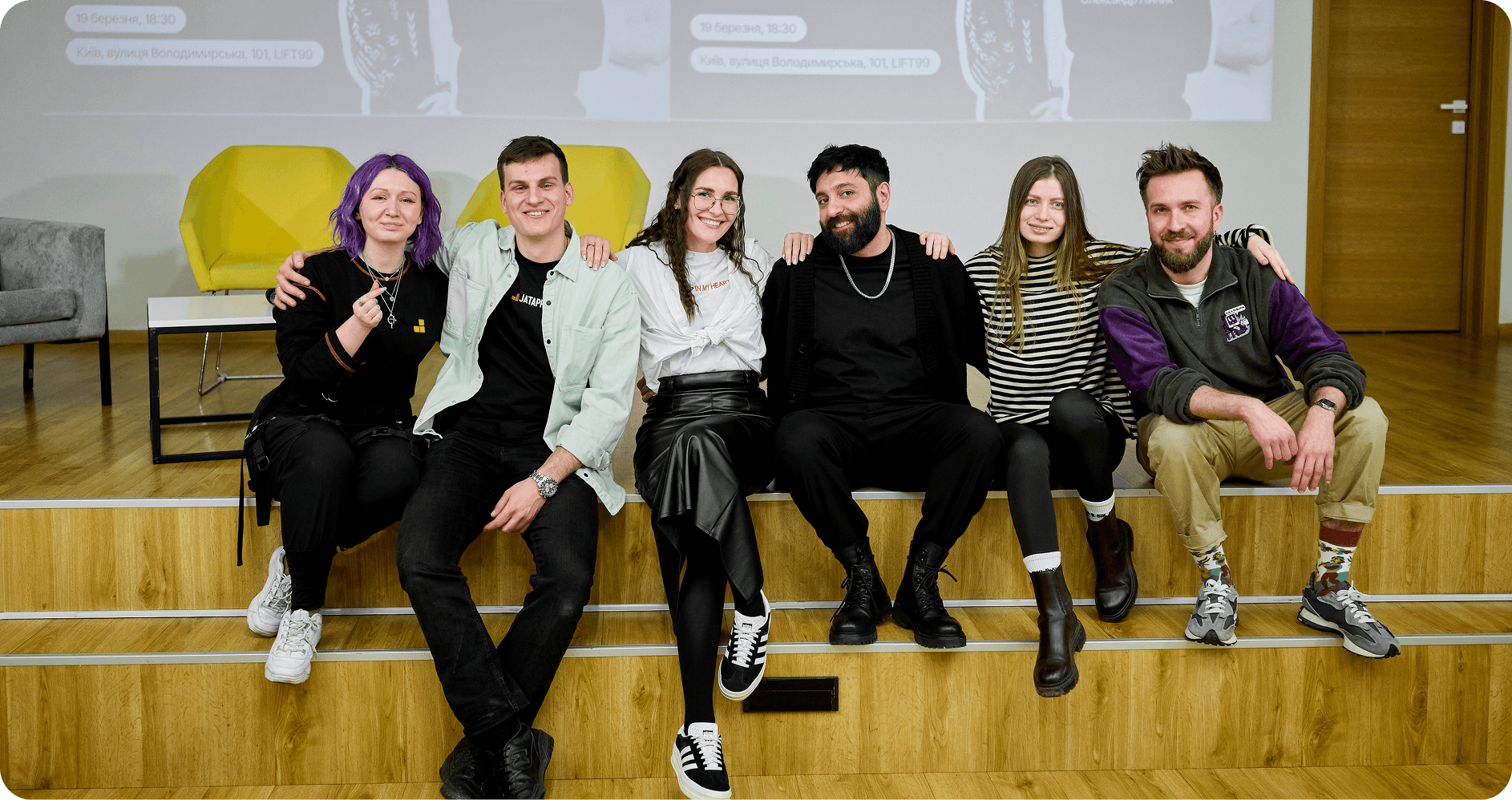
Speakers of the Evening
Taking the stage were our colleagues — Heads of Product at JATAPP:
Mykhailo Mirzaiev — Quarterly Planning Through a Financial Model
Oleksandr Linnyk — Pivot: What to Do When the Plan Breaks
Denys Ratushniak — When NOT to Launch: How to Decide to Stop a Product
Mykhailo Mirzaiev:
Quarterly Planning Through a Financial Model
Mykhailo opened the evening with a topic most PMs know from the inside — but few have solved systematically.
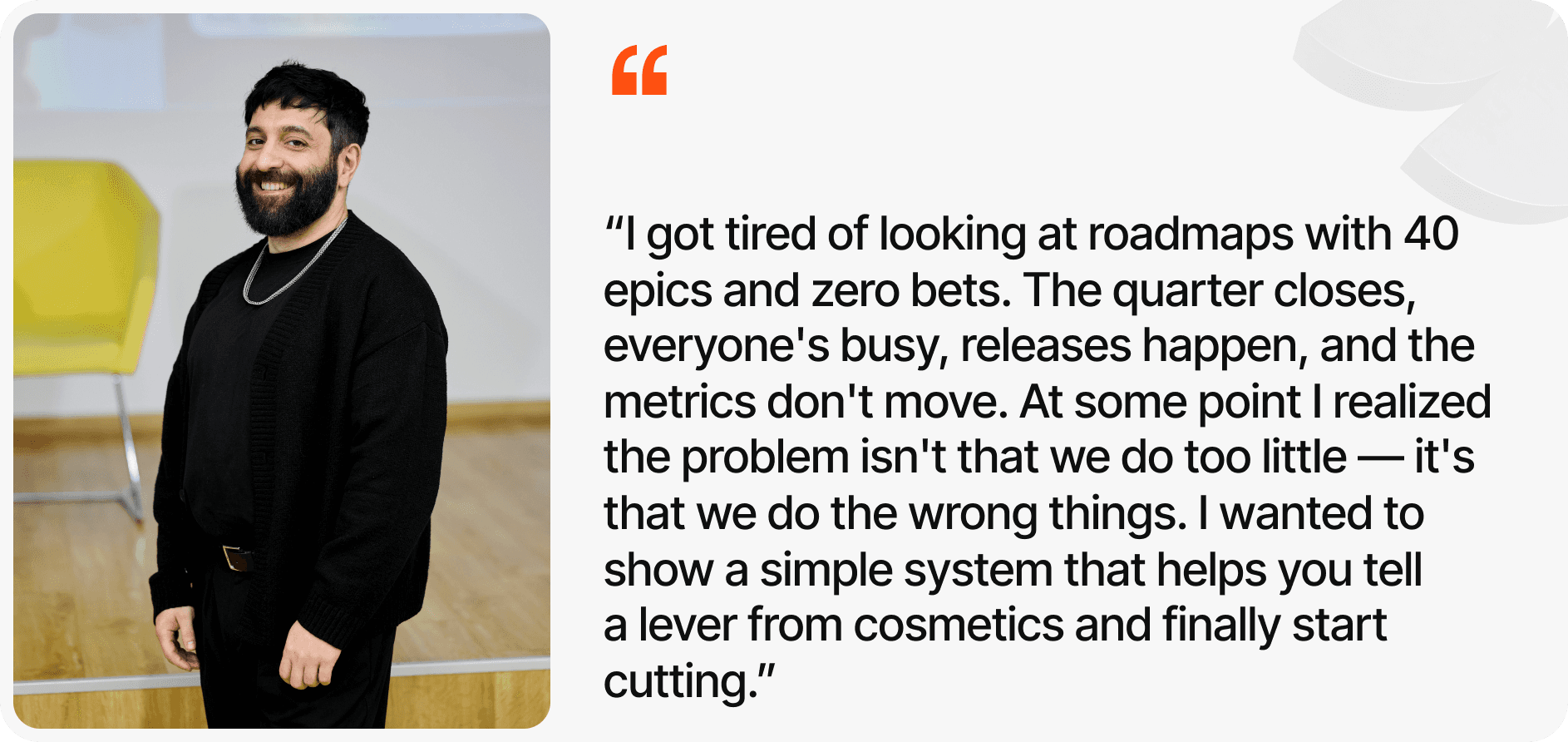
Mykhailo laid out an approach built on unit economics: find the four levers that drive your metrics, benchmark your gap against the market, and frame hypotheses as «X → Y by +Z% → impact on Revenue $». Anything that doesn't hit these levers is noise.
He also spoke about the psychology of saying no. A team that can drop ideas publicly is a mature team. One that holds on to everything is a team without a strategy.
Oleksandr Linnyk:
Pivot — What to Do When the Plan Breaks
Oleksandr talked about what happens after the moment you realize: the plan didn't work.
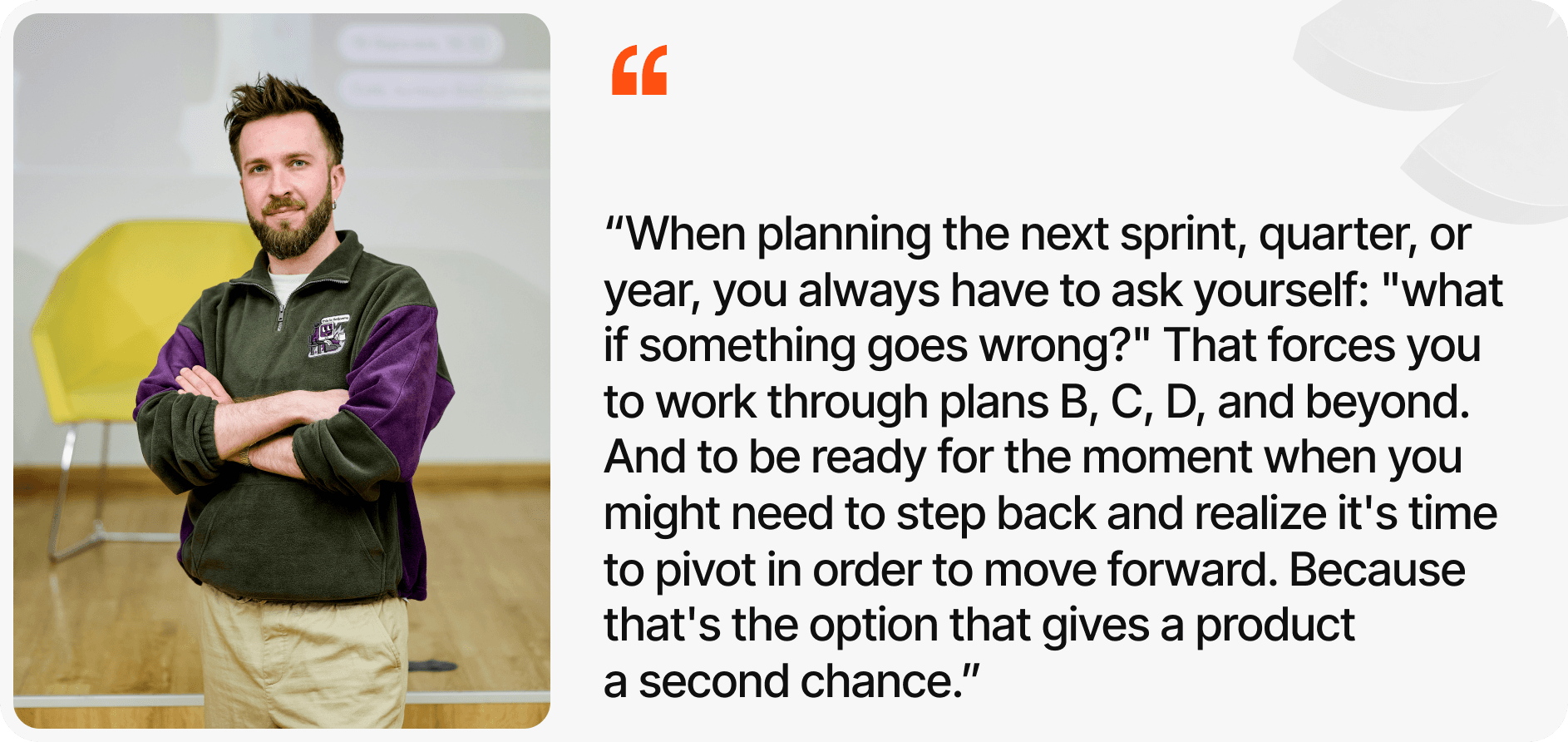
Through the cases of YouTube (from a video dating site to $1.65B), Instagram (cut 60% of features — got a billion users), and Airbnb during COVID, Oleksandr showed that the problem isn't the pivot itself — it's recognizing the right moment for it.
To help with that, he walked through several tools: Kevin Chow's 4 Pillars of Product framework, Gary Klein's Kill Criteria technique («if metric X doesn't reach level Y by date Z — we change course»), Des Traynor's Zombie Feature Kill List, and the Now-Next-Later roadmap, where a pivot doesn't mean «turning around» — it means re-prioritizing what's in Next.
Denys Ratushniak:
When NOT to Launch — How to Decide to Stop a Product
Denys closed the evening with a topic that rarely gets discussed openly.
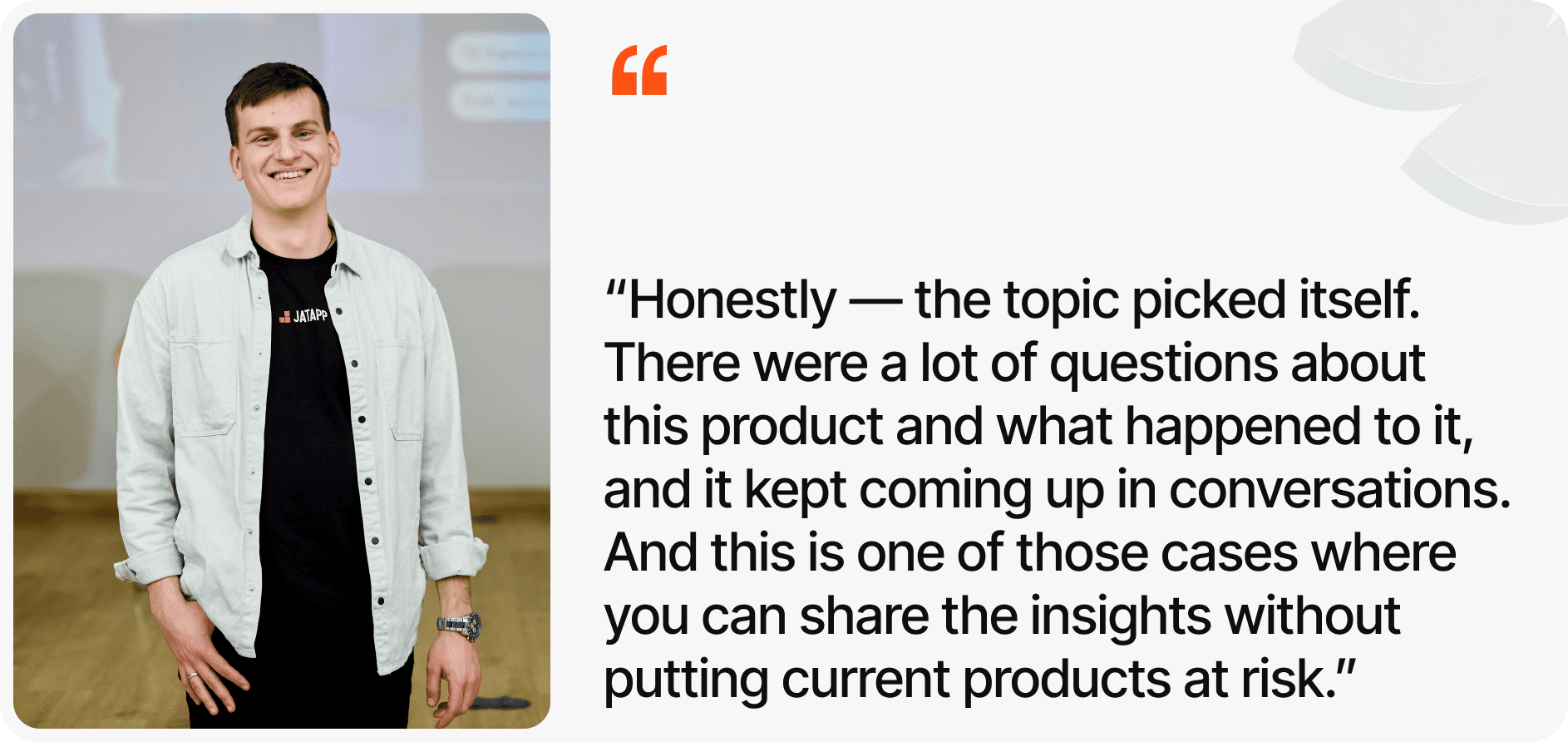
Denys walked through a real case — the product Holify (an AI assistant for reading the Bible) — and honestly named the mistakes that led to the decision not to launch. Among them: focusing on short-term metrics without accounting for seasonality, benchmarking against competitors that run on donations and church funding (not user monetization), and entering a new channel without the expertise — while competitors had Chris Pratt in their creatives and 103 million organic TikTok views, and the team had neither.
The key takeaway: stopping a product isn't failure. It's a decision that frees up resources for the next real bet.
Q&A and Networking
After the talks, we took questions from the audience — and there were plenty. People asked about specific cases, how to communicate a decision to stop a product to the team, and how to build kill criteria without turning them into a formality.
Thank you to everyone who came and made the evening come alive.
Follow the announcements of upcoming events on our website and social media.